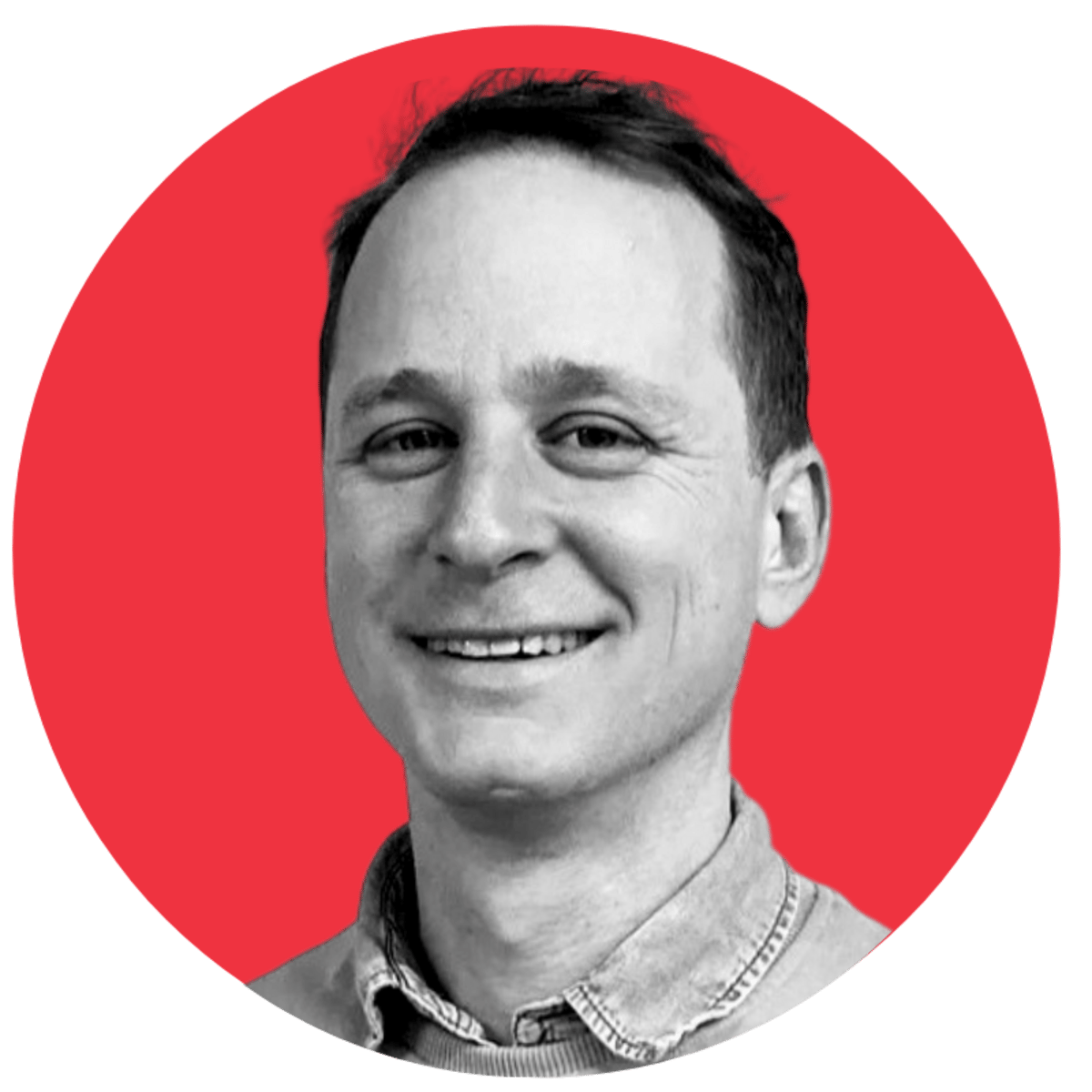

“AI tools have industrialised divisive content. The barrier to entry has collapsed.”
Sam Stockwell, Centre for Emerging Technology and Security
Independent newsrooms like ours don’t answer to advertisers, shareholders or governments – we answer only to you. Investigations take time, expertise and the freedom to follow the story wherever it leads. If you value bold and brave reporting, consider supporting us today.
Hi {{first_name|there}},
Once upon a time, many of us were under the impression that hateful propaganda was being spread online by people who at least believed the things they were saying.
But this week, the Bureau revealed how a devout Muslim man in Pakistan has built a lucrative network of pages posting AI-generated Islamophobic content aimed at British audiences – pumping out fake videos, inflammatory memes and anti-Muslim conspiracy theories.
The content was often absurd: one clip shows Keir Starmer dressed in Islamic clothing praising “violent Muslim immigrants”. The video itself was pretty poor, looking more like a glitchy video game than actual footage. Other posts framed pictures of Muslims praying in public as evidence of an “Islamic takeover” of Britain.

Why did he do it? Well, he was making good money because the pages attracted hundreds of thousands of followers and racked up millions of views on Facebook and Instagram. And that’s the most revealing part of this latest story – not the content itself, but the business model driving it.
When our reporters tracked down the man responsible, he described a workflow entirely detached from ideology. He found a topic that performed well (Islamophobic content), fed it into generative AI tools such as Grok and Google’s image generator Whisk, and posted them consistently across social platforms.
His strategy worked because tech companies like Meta employ algorithms that incentivise this sort of hateful content. He told our reporters he was earning around $1,500 a month.
What this investigation revealed to me was a new kind of online business model: AI tools make the propaganda, social platforms find the audience and the outrage does the rest.
Generative AI has made it dramatically easier to produce this type of content at an industrial scale. The barriers that once existed for people wanting to create viral videos – language ability, software skills, even time – have collapsed. Anyone can get involved.
Sam Stockwell, the researcher we spoke to for this investigation, described this new way of making money as a “shadow influencer” economy. Anonymous operators are encouraged to produce divisive content not because they believe it or agree with it, but because the attention it attracts is profitable.
In an era of rising economic uncertainty, the combination of new AI tech and social platforms’ thirst for engagement is encouraging people to spread hate for a quick buck.
The floodgates are open.
Factchecked!
Each week we reveal a fascinating fact from our reporting…
Did you know?
Hundreds of thousands of people could die following the new UK-US healthcare agreement, which puts further pressure on the NHS.
Find out more
Health economist Karl Claxton led a team of researchers at the University of York to model potential outcomes of the deal. His findings are stark: “By 2033, the excess deaths from this deal will be greater than Covid.” His team predicts that an additional quarter of a million people in the UK could die by 2036 as a result of the deal, which draws money away from other parts of the NHS.
Following the agreement of the deal, US health secretary Robert F Kennedy Jr. thanked Trump for ”delivering results that put Americans first”.
Read more here.
Voices For Transparency
At the Bureau we’re constantly thinking about how we can get governments and decision-makers to care about the wrongdoing we reveal – after all, what better way to encourage positive change?
But it’s no simple task.
Case in point: despite us exposing how the UK enables kleptocracy, dictatorships and organised crime around the world, little has changed. Too often, debates about offshore secrecy are reduced to dry policy arguments about company transparency and property registers, turning a blind eye to the real-world harm the system enables.
So, ahead of the government’s Illicit Finance Summit next month – where Keir Starmer’s team will present itself as a leader in the fight against kleptocracy – our very own Lucy Nash decided to try a different approach.

Photo by Katia Pirnak
Lucy interviewed 17 victims of fraud, corruption and money laundering conducted through the UK’s various Crown Dependencies and Overseas Territories. Working together with Lucy Brisbane McKay and Elle Zahrouni, she arranged for their portraits to be taken and displayed in a photography exhibition at the beautiful Guild Church of St Katherine Cree in London.
The show’s launch on Tuesday was a spectacular event, bringing together activists, campaigners, City grandees and the project’s participants.
Here’s an excerpt from the speech our reporter Ed Siddons gave to the assembled crowd:
“Tonight’s exhibition is one attempt to put the victims back into the equation: to show what years of secrecy have allowed in the name of Britain and its overseas territories.
In the context of war, inflation, endless political sleaze scandals, making stories about transnational corruption feel urgent is not easy. They are faraway stories about faraway places that get pushed out by day-to-day pressures.
But these crimes are not numbers on balance sheets.
They are not victimless. Every fraud ruins a victim’s life. Every tax dodger makes our public services weaker.
Every butcher who slaughters his people and retires into gilded exile, protected by layer after layer of offshore secrecy, makes the next butcher more likely to think he can get away with it.”
You can visit the exhibition and explore the stories yourself, until May 19th.
What we’ve been reading
🔴 Secret filming has revealed how dangerous advice on baby sleep has been given to parents by self-described experts: bbc.co.uk
🔴 Learn about the plot to cover Europe with gas-powered AI data centres: desmog.com
🔴 After a cardiologist was convicted of sexually assaulting his patients in France, he was stripped of his medical licence – so he hopped across the border to Belgium and obtained a new licence there: occrp.org
Thanks,
Franz
Franz Wild
CEO and Editor-in-Chief

